
Custom sheet metal parts in as little as 3 days - Get a quote now!

2026 Best Carbon Tube Types for Global Buyers?

Choosing the right Carbon Tube in 2026 will require more than comparing wall thickness and supplier prices. Global buyers must examine fiber grade, resin system, braid orientation, dimensional tolerance, and test documentation. A tube that feels rigid on a warehouse bench may still fail under vibration, heat, or repeated bending.

Market estimates show strong demand. MarketsandMarkets projects the global carbon-fiber market to grow from about USD 4.7 billion in 2023 to USD 7.4 billion by 2028, at a compound annual growth rate near 9.5%. The International Energy Agency also reports rising demand for lightweight materials across electric vehicles, wind energy, and other clean-energy technologies. These trends support wider Carbon Tube adoption. However, published forecasts use different definitions. Buyers should compare assumptions carefully.

Professor Wolfgang Krenkel, a recognized composites-materials expert, has emphasized, “The material must be selected according to the application.” That principle remains practical. Pultruded tubes may suit straight, repeatable structures. Roll-wrapped tubes can offer better directional customization. Braided constructions may handle complex loading more effectively. Small details matter. A 0.2-millimeter tolerance can affect assembly. Moisture exposure can change bonding results. Some suppliers provide impressive tensile figures but limited fatigue data. That gap deserves attention.

The best 2026 choice will balance performance, traceability, production consistency, and total cost. Not every premium Carbon Tube is necessary. Not every low-cost option is dependable. Buyers should request certificates, sample testing, and application-specific validation before placing global orders.
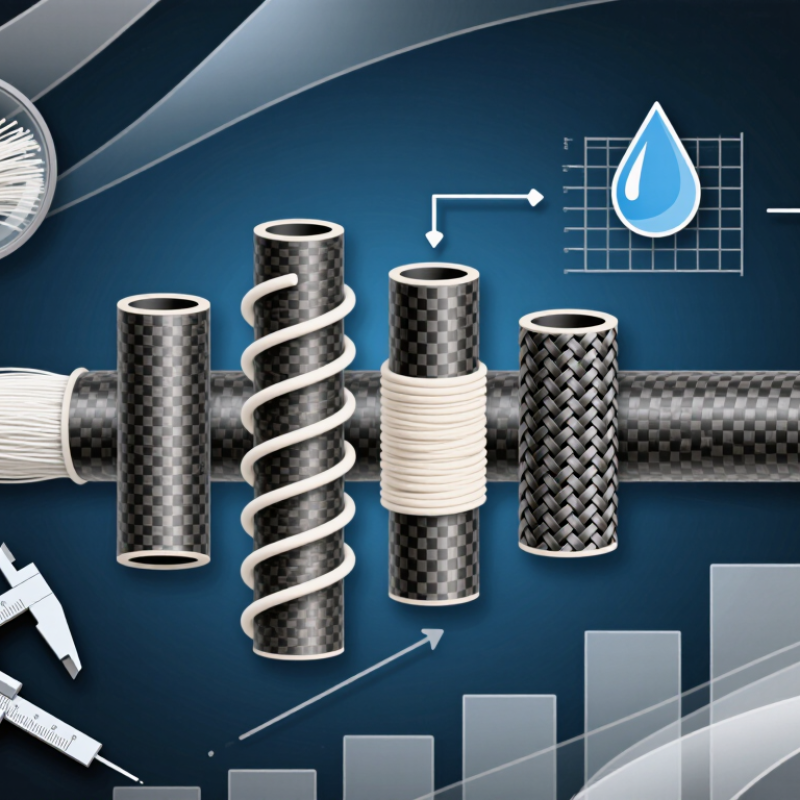
2026 Best Carbon Tube Types for Global Buyers?

Carbon Tube Basics and Key Performance Characteristics

Carbon tubes are not a single material category. Carbon-fiber-reinforced polymer tubes combine strong fibers with a resin matrix. Graphite tubes use carbonized material and often tolerate higher temperatures. Their behavior differs sharply.

A pultruded tube usually places fibers along its length. It offers high axial stiffness and consistent dimensions. A filament-wound tube can use angled fibers, improving torsional resistance. Fiber orientation matters more than appearance. A glossy surface proves little. According to ASTM D3039 and ASTM D790 testing practices, tensile and flexural results must be reported with specimen direction, temperature, and conditioning details. Without those details, catalog figures can mislead.

Weight reduction is a major advantage. Carbon composites can deliver high stiffness at low mass, but impact resistance may be limited. Moisture, ultraviolet exposure, drilling, and poor joints can reduce service life. I would not trust a strength value alone. Ask for wall thickness, fiber angle, resin system, tolerance, and test method. The 2024 International Energy Agency Global Critical Minerals Outlook projects graphite demand to roughly triple by 2030 under stated policies, while the U.S. Geological Survey reported about 1.6 million metric tons of natural graphite mine production in 2024. Supply is expanding, but material consistency still requires verification. Small defects matter.

Main Carbon Tube Types and Their Structural Differences

Carbon tubes are not one material. Their structure changes with the carbon form, manufacturing process, and loading direction. Carbon steel tubes use iron with controlled carbon content. They are commonly welded or seamless, with isotropic strength around the wall. Seamless tubes avoid a longitudinal weld, while welded tubes offer efficient sizing and production. World Steel Association data recorded about 1.88 billion tonnes of crude steel production in 2024, supporting broad availability for global projects.

Carbon-fiber tubes use continuous fibers inside a polymer matrix. Pultruded tubes usually place fibers along the length, giving strong axial stiffness. Filament-wound tubes can use angled layers, improving torsional resistance. Their weakness is different: impact damage may remain hidden, and joints require careful design. The U.S. Department of Energy reports that reducing vehicle weight by 10% can improve fuel economy by roughly 6% to 8%. This explains carbon fiber’s appeal in transport structures, despite higher inspection and processing costs.

Carbon-nanotube composites are a smaller, developing category. Nano-scale fillers can improve conductivity, crack resistance, and matrix performance, but they do not automatically create a stronger tube. Results depend on dispersion and bonding. Poor processing can erase the expected benefit. MarketsandMarkets projected continued growth for the carbon-fiber market through 2029, yet forecasts vary by methodology. Buyers should compare fiber direction, wall thickness, joining method, test temperature, and certification requirements. Weight alone is not enough. A lighter tube may fail earlier under crushing, vibration, or local impact.

2026 Best Carbon Tube Types for Global Buyers

Main carbon tube cross-sections and their structural differences

The comparison uses representative 40 mm maximum outer dimensions and a 2 mm wall thickness. Section area indicates material volume and approximate weight, while the second moment of area indicates geometric resistance to bending. Square tubes provide the highest bending stiffness within this comparison; rectangular tubes are useful when stiffness is required mainly in one direction. Actual carbon tube performance also depends on fiber orientation, resin system, laminate quality, and manufacturing process.

How to Match Carbon Tubes With Industrial Applications

2026 Best Carbon Tube Types for Global Buyers?

Choosing a carbon tube starts with the application, not the catalogue title. Carbon steel tubes suit frames, fluid lines, and moderate-pressure systems. Seamless tubes handle demanding pressure cycles better, while welded tubes often fit structural projects with controlled loads. Carbon fiber tubes are different. They offer low weight and high stiffness for robotics, inspection equipment, and transport components. Pultruded tubes work well for straight, uniform sections. Filament-wound tubes can provide better directional strength, but only when the load path is understood.

Tips: Check diameter, wall thickness, working temperature, impact risk, and corrosion exposure. Ask for material certificates, dimensional inspection records, and test results. A shiny surface proves very little. For outdoor steel use, confirm the coating system and drainage design. For carbon fiber, inspect the resin system and joint method. Adhesive joints may fail before the tube does.

In practical sourcing, I compare the expected load with real installation conditions. A tube inside a clean factory may face vibration, moisture, or accidental impact after shipment. That changes the selection. Carbon steel may be economical, but its added weight can increase assembly costs. Carbon fiber saves mass, yet drilling or clamping can damage its fibers. I have seen specifications focus on tensile strength while ignoring buckling. That is an easy mistake. Test a representative assembly when failure would be costly. Temperature data is sometimes incomplete, too. Recheck it before approval.

2026 Best Carbon Tube Types for Global Buyers? - How to Match Carbon Tubes With Industrial Applications

Practical comparison of carbon-fiber composite tube constructions for structural, mechanical, transport, energy and precision applications.

Typical engineering ranges for carbon-fiber-reinforced polymer tubes. Actual performance depends on fiber grade, resin system, fiber orientation, wall thickness, curing process, joints, safety factors and test standards. Values are indicative rather than product specifications.
Carbon Tube Type Typical Fiber Architecture Typical Tensile Strength
(Longitudinal)
Typical Longitudinal Modulus Main Performance Advantage Main Limitation Best-Fit Industrial Applications Buyer Selection Priority
Pultruded Unidirectional Tube Mostly continuous fibers aligned with the tube axis; limited transverse reinforcement 600–1,500 MPa 50–140 GPa High axial stiffness and strength with consistent dimensions and efficient continuous production Lower resistance to hoop stress, localized crushing, impact and off-axis loading Lightweight beams, actuator rods, robotic arms, cable supports, structural spars and instrument booms Axial load, straightness, dimensional tolerance and required transverse reinforcement
Filament-Wound Tube Continuous fibers wound at controlled angles, commonly combining hoop and helical plies 500–1,200 MPa 35–100 GPa Efficient load tailoring for torsion, internal pressure and combined axial-hoop loading Fiber-angle optimization and mandrel tooling can increase design and production complexity Pressure vessels, drive shafts, rollers, torque tubes, pumps, fluid-handling equipment and automation systems Pressure rating, torque, winding angle, permeation resistance and end-fitting design
Roll-Wrapped Quasi-Isotropic Tube Prepreg layers commonly arranged at 0°, ±45° and 90° around a mandrel 350–900 MPa 30–80 GPa Balanced multidirectional properties, smooth surfaces and good control of wall thickness Higher labor and material cost than simple pultrusion; seam and laminate quality require control Medical equipment, precision shafts, camera supports, aerospace structures, laboratory devices and light robotics Surface finish, dimensional tolerance, laminate balance, bore accuracy and cosmetic requirements
Braided or Overbraided Tube Interlaced carbon fibers, often combined with axial tapes or a structural inner laminate 300–850 MPa 25–75 GPa Good drapability, damage tolerance and coverage around curved or complex geometries Fiber waviness can reduce axial stiffness; highly loaded designs may need additional axial plies Automotive crash structures, complex elbows, protective housings, sports equipment and impact-sensitive assemblies Impact energy, shape complexity, drape quality, crush behavior and local reinforcement
High-Modulus Carbon Tube High-modulus carbon fibers with a predominantly axial laminate 400–1,000 MPa 100–250 GPa Very high stiffness-to-weight ratio and low elastic deflection under axial or bending loads Generally more brittle, less impact-tolerant and more sensitive to handling and stress concentrations Metrology frames, optical benches, precision robots, aerospace booms and vibration-sensitive equipment Stiffness target, vibration mode, impact environment, joint design and allowable strain
Toughened Intermediate-Modulus Tube Intermediate-modulus carbon fibers with a tougher epoxy or modified resin system 500–1,200 MPa 45–110 GPa Balanced stiffness, strength, fatigue resistance and impact tolerance Usually heavier or less stiff than a high-modulus design with the same outer dimensions Industrial automation, marine components, rail systems, vehicle structures, lifting equipment and outdoor machinery Fatigue cycles, impact exposure, moisture resistance, service temperature and total cost
Thermoplastic Carbon-Fiber Tube Carbon fibers in thermoplastic matrix, produced by consolidation, winding, braiding or automated placement 250–900 MPa 25–100 GPa Shorter processing cycles, weldable joints in suitable materials and improved impact resistance or recyclability potential Higher processing temperature and equipment requirements; creep must be checked under sustained load Automotive semi-structural parts, aircraft interiors, modular frames, transport systems and high-volume components Matrix type, weldability, cycle time, creep, recyclability route and production volume
Carbon-Glass Hybrid Tube Carbon fibers combined with glass fibers, usually placing carbon in primary load paths and glass in outer or impact layers 250–800 MPa 20–75 GPa Improved impact tolerance and electrical insulation potential at a lower cost than an all-carbon laminate Lower stiffness and higher mass than an all-carbon tube; galvanic interfaces still require proper isolation from metals Marine structures, utility poles, electrical equipment, sporting goods, vehicle components and protective frameworks Impact resistance, electrical behavior, corrosion isolation, weight target and material budget
Carbon Fiber Telescopic Tube Multiple concentric tubes, commonly pultruded or roll-wrapped, with controlled clearances and end stops 250–900 MPa 30–120 GPa Low mass, adjustable length, corrosion resistance and high specific stiffness Clearance, buckling, wear, joint loads and alignment are more critical than in a single tube Aerial inspection equipment, antenna masts, lighting supports, camera systems, rescue tools and portable structures Collapsed length, extension length, locking method, bending load, wear resistance and field serviceability
Square or Rectangular Carbon Tube Pultruded, roll-wrapped or molded laminate with orthogonal faces and corner reinforcement 250–900 MPa 30–120 GPa Flat mounting faces, improved anti-rotation behavior and easy integration into framed assemblies Corners can create stress concentrations and require careful control of laminate consolidation Machine frames, architectural structures, battery enclosures, conveyor systems and robotic tooling Corner radius, flatness, connection method, torsional stiffness, buckling and dimensional tolerance
Quick Matching Guide: Select pultruded tubes for predominantly axial loads, filament-wound tubes for pressure or torsion, roll-wrapped tubes for balanced precision laminates, braided tubes for complex geometry or impact exposure, high-modulus tubes for minimum deflection, thermoplastic tubes for faster production and weldable designs, and hybrid tubes when impact tolerance, electrical insulation or cost control is important.

Global Standards, Quality Checks, and Certification Requirements

2026 Best Carbon Tube Types for Global Buyers?

Carbon tubes may be seamless, welded, or precision-drawn. The right choice depends on pressure, geometry, temperature, and end-use risk. Global buyers should not select a tube type from price alone. A low-cost welded tube may suit structural frames, while seamless tubing may better serve demanding pressure applications. However, “seamless” does not automatically mean superior.

Standards must match the destination market and service conditions. Buyers commonly compare ASTM, ASME, EN, ISO, and other recognized specifications. The purchase document should define outside diameter, wall thickness, length tolerance, steel grade, heat treatment, and testing frequency. Ask for an EN 10204 3.1 inspection certificate when traceability matters. It should connect the product to a heat number, chemical analysis, mechanical results, and inspection records. Generic certificates are weak evidence.

Quality checks should include dimensional measurement, visual inspection, surface condition, tensile testing, hardness, and impact testing when required. Pressure-service tubes may need hydrostatic, ultrasonic, or eddy-current testing. Check calibration dates, sampling plans, and nonconformance procedures. Small details matter. A polished surface is not proof of strength. In practical purchasing reviews, missing traceability creates more concern than minor cosmetic marks. Certification can support trust, but it cannot replace independent verification. Requirements are sometimes interpreted differently, even within the same market. That deserves careful review.

Sourcing, Cost Factors, and Supplier Evaluation for 2026

For global buyers, the best carbon tube depends on load, geometry, and production volume. Pultruded tubes suit straight beams with consistent fiber direction. Filament-wound tubes handle balanced loads and complex pressure demands. Braided or prepreg tubes offer better impact performance, but they often require tighter process control. In 2026, buyers should request fiber type, resin system, wall thickness, and dimensional tolerances before comparing prices.

Sourcing cost includes more than the quoted tube price. Tooling, cutting, packaging, freight, inspection, and minimum order quantities can change the final figure. A lightweight tube may reduce shipping costs, yet poor concentricity can create expensive assembly problems. Ask suppliers for production samples, batch records, test data, and clear acceptance standards. Factory audits or live video inspections can reveal storage conditions, winding accuracy, and finishing quality. Certificates help, but they do not replace physical verification. I have seen impressive reports hide inconsistent edges. That remains a warning.

Tips: Compare at least three suppliers using the same drawing and test requirements. Check lead times during peak production periods. Request a sample before approving mass production. Discuss recycled content carefully, because claims may lack useful traceability. Review communication speed and corrective-action records, not only unit price. A reliable supplier explains limitations openly. That matters.