Custom sheet metal parts in as little as 3 days - Get a quote now!

What Is the Best Large CNC Machine from China?

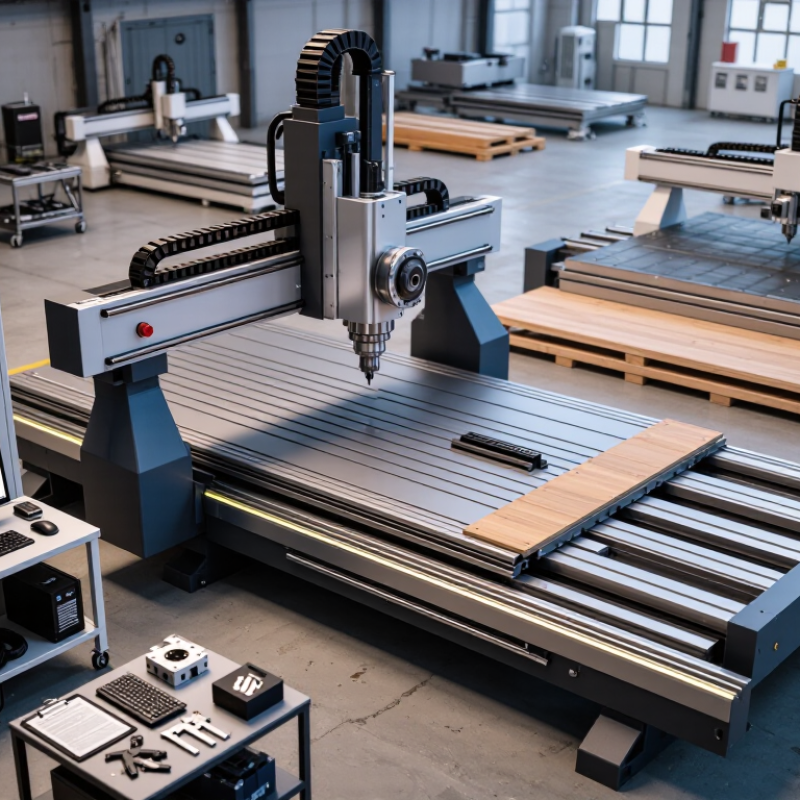
Choosing the best large CNC machine from China requires more than comparing prices and advertised working areas. A machine may appear powerful online, yet perform poorly under continuous factory use. Real evaluation should include cutting accuracy, spindle stability, frame rigidity, control-system reliability, and after-sales support. Size matters. A 3,000 × 1,500 millimeter table may suit large furniture panels, aluminum sheets, or industrial components, but it also demands stronger motors, better leveling, and more workshop space.

Experienced buyers usually inspect machine videos, test reports, customer references, and factory production details. They should ask for repeatability data, spindle specifications, guide-rail brands, electrical standards, and software compatibility. A reliable Chinese manufacturer should explain these points clearly instead of offering vague promises. The supplier’s response time also matters when a sensor fails or calibration changes after shipping. Small service delays can stop an entire production line.

This guide examines popular Chinese manufacturers and compares their large CNC machine models by application, construction quality, automation, maintenance, and total ownership cost. It considers routers, machining centers, plasma systems, and other large-format equipment separately. The cheapest machine is rarely the safest investment. However, the most expensive model may include unnecessary features for a smaller workshop. That judgment is easy to get wrong. Honest analysis must acknowledge limitations, including incomplete factory data, regional service differences, and changing component availability. Buyers should verify every critical specification before signing an order. A practical choice balances measurable performance with dependable support, not impressive photographs alone.
What Is the Best Large CNC Machine from China?

What Defines a Large CNC Machine and Its Main Industrial Uses

What Is the Best Large CNC Machine from China?

A large CNC machine is defined by its working envelope, not by appearance alone. Its table may exceed three meters, while gantry height supports thick steel, aluminum, stone, or composite panels. Long X-axis travel matters for ship parts and construction machinery. Strong spindle torque matters for heavy cuts. However, oversized dimensions do not guarantee accuracy. Frame stiffness, guideways, ball screws, and thermal control often decide the final result. In practical workshops, even a small alignment error can become visible across a long workpiece. That is easy to underestimate.

Large CNC machines serve aerospace fabrication, energy equipment, rail components, mold production, and industrial furniture. Each application needs different travel, spindle power, tooling, and loading methods. A machine for aluminum panels may not suit hardened steel blocks. Check cutting samples, repeatability reports, calibration records, and factory acceptance procedures. Ask how the machine handles vibration during continuous production. The answer may reveal more than a specification sheet.

Tips: Measure your workshop doors, floor strength, power supply, and material flow before ordering. Leave space for maintenance access. Request a test cut using your actual material. Also, confirm remote support, spare-part availability, training, and local electrical compliance. Do not choose the largest machine automatically. I have seen capacity look impressive on paper, yet remain unused because loading was slow and programming was difficult. A practical machine is often the better machine.

Key Specifications for Comparing Large CNC Machines from China

What Is the Best Large CNC Machine from China?

Key Specifications for Comparing Large CNC Machines from China

Choosing a large CNC machine requires more than checking its advertised size. Grand View Research estimates the global CNC machine market reached about USD 83.99 billion in 2023, with continued growth expected through 2030. This growth increases buyer choice, but also creates specification confusion. Compare the working envelope, axis travel, table load, spindle power, and torque. A 3,000-millimeter table may sound impressive, yet insufficient travel can limit real production. A bigger table is not automatically better.

Accuracy needs practical evidence. Request positioning accuracy and repeatability results under recognized testing standards, not only brochure claims. Thermal compensation matters during long cutting cycles. The machine should also provide stable chip evacuation, rigid guideways, automatic tool changing, and a control system that supports your post-processor. Industry surveys, including Gardner Intelligence’s World Machine Tool Survey, repeatedly show that productivity depends on utilization, not purchase price alone. Service response, spare-part availability, training, and installation support deserve equal attention.

Tips: Ask for a cutting trial using your largest material and most difficult toolpath. Measure cycle time, surface finish, vibration, and temperature drift. Check the electrical requirements before shipping. I have seen buyers focus on spindle power and overlook foundation design. That mistake can become expensive. Also, compare the machine’s repeatability after several hours, because a perfect morning test proves very little. Specification sheets help, but witnessed testing is more reliable.

Leading Types of Large CNC Machines and Their Best Applications

What Is the Best Large CNC Machine from China?

The best large CNC machine depends on the workpiece, tolerance, and available floor space. Fortune Business Insights estimates the global CNC machine market will grow from about USD 86.8 billion in 2024 to USD 140.8 billion by 2032. That growth reflects stronger demand for automated metalworking and repeatable production. From practical evaluations, rigidity often matters more than maximum spindle speed. A heavy gantry, reinforced guideways, and stable thermal control can prevent visible chatter on large steel plates. Not glamorous, but essential.

Gantry CNC machines suit oversized plates, structural parts, and mold bases. Their open working area makes loading easier. Bridge-type machines offer higher rigidity for aerospace frames and precision dies. Horizontal boring and milling machines are better for deep bores, engine housings, and large welded structures. Five-axis systems reduce repositioning during complex impeller or turbine work. The International Federation of Robotics reported more than 4 million industrial robots operating worldwide in 2023, showing how factories increasingly connect machining with automated handling. However, integration is not always simple.

A reliable selection should include laser calibration, spindle testing, and documented acceptance results. ISO 230-2 provides a recognized method for checking positioning accuracy. Buyers should also inspect chip evacuation, coolant filtration, electrical components, and local service response. I would not choose a machine only from a specification sheet. Real cutting samples reveal more. A small mistake in foundation design can ruin excellent accuracy. Size matters. Reliability is the real test.

How to Evaluate Chinese CNC Machine Manufacturers and Suppliers

Choosing the best large CNC machine from China starts with evaluating the supplier, not the brochure. Gardner Intelligence’s 2023 World Machine Tool Survey reported global machine tool consumption of about US$81.9 billion in 2022. China represented roughly US$27.1 billion. This scale shows manufacturing strength, but it does not guarantee consistent quality.

Request verifiable factory evidence. Check ISO 9001 certification, calibration records, spindle test results, and machine accuracy reports based on ISO 230-2. Ask for a video of a similar large machine cutting your material. Review ball-screw protection, guideway design, thermal control, and electrical components. A reliable supplier should explain tolerances clearly, not hide behind words like “high precision.” Confirm installation support, spare-parts availability, training, and response times in writing. One overlooked detail can stop production.

Tips: Compare three suppliers using the same technical specification. Ask for five-year reference customers, not only recent buyers. Request a factory acceptance test with your sample drawing. Clarify whether accuracy is measured cold or after warm-up. The latter matters. Also inspect packaging plans and shipping insurance. The International Federation of Robotics reported more than 4.28 million industrial robots operating worldwide in 2023, reflecting rising automation expectations. CNC suppliers should therefore provide integration-ready controls and documented interfaces. No checklist is perfect. A polished audit can still miss poor after-sales support, so test communication before signing.

What Is the Best Large CNC Machine from China? How to Evaluate Chinese CNC Machine Manufacturers and Suppliers

The best large CNC machine depends on workpiece size, material, tolerance, production volume, spindle requirements, and after-sales support. The figures below are practical industry reference ranges for initial supplier comparison; final specifications must be confirmed against the machine builder's technical proposal, acceptance test, and applicable standards.

Machine Configuration Typical Working Envelope Typical Spindle Range Suitable Materials and Parts Main Advantages Main Limitations Best-Fit Purchasing Scenario
Large 3-Axis Gantry Milling Machine X: 2,000–20,000 mm
Y: 1,500–6,000 mm
Z: 800–2,500 mm
6,000–18,000 rpm
15–60 kW
Approx. 20–1,500 N·m
Steel structures, aluminum parts, molds, welded fabrications, machine bases, panels, and general large components. Large cutting area, relatively simple programming, good accessibility, and generally lower cost than a comparable 5-axis system. Limited access to complex angled surfaces; additional setups or fixtures may be required.
Large 5-Axis Gantry or Bridge Machine X: 2,000–15,000 mm
Y: 1,500–5,000 mm
Z: 800–2,500 mm
8,000–24,000 rpm
15–60 kW
Torque depends on head design
Aircraft structures, turbine components, molds, marine parts, impellers, and complex contoured surfaces. Fewer setups, better access to compound surfaces, and reduced fixture-related errors. Higher purchase and maintenance cost; requires advanced CAM programming and skilled operators.
Large Bridge Mill X: 3,000–30,000 mm
Y: 2,000–8,000 mm
Z: 1,000–3,000 mm
4,000–12,000 rpm
22–75 kW
High torque for heavy cutting
Large molds, dies, energy equipment parts, heavy steel fabrications, and oversized castings. High structural stiffness, long travel, strong cutting capability, and suitable support for heavy workpieces. Large foundation, significant installation requirements, and higher transportation and commissioning costs.
Horizontal Boring and Milling Machine X: 1,500–10,000 mm
Y: 1,200–4,000 mm
Z: 1,000–3,000 mm
W: 600–2,000 mm
1,500–6,000 rpm
15–60 kW
Approx. 1,000–12,000 N·m
Gearboxes, engine blocks, valve bodies, housings, structural castings, and parts requiring deep internal bores. Strong boring capability, excellent access to side faces, and suitability for heavy steel and cast iron work. Usually slower than high-speed gantry equipment and may require careful workholding for long boring operations.
Large CNC Vertical Turning and Milling Center Turning diameter: 1,600–8,000 mm
Turning height: 1,000–5,000 mm
Table speed: approximately 1–250 rpm
Motor power: 30–160 kW
Torque varies by table size
Large flanges, rings, bearings, wheels, pressure-vessel components, and rotational parts. Efficient loading of heavy round workpieces, good chip evacuation, and strong turning performance. Not suitable for long non-rotational parts or components whose main features require extended linear milling travel.
Large CNC Router X: 2,000–12,000 mm
Y: 1,500–4,000 mm
Z: 200–800 mm
12,000–30,000 rpm
5–25 kW
Lower torque than metal-cutting mills
Wood, plastics, composite panels, aluminum sheet, foam, and light non-ferrous materials. High feed rates, large sheet processing area, and lower operating cost for light-duty cutting. Generally unsuitable for heavy steel cutting, deep cuts, or applications requiring high structural stiffness.
Supplier Evaluation Dimension What to Verify Practical Acceptance Evidence Recommended Minimum Requirement Why It Matters
Machine Structure and Rigidity Bed and column design, casting or fabricated construction, rib layout, guideway size, thermal symmetry, and foundation requirements. Structural drawings, machine weight, finite-element analysis summary, foundation plan, and a cutting test using the customer's material. Supplier must provide a documented structural specification and demonstrate stable cutting under the planned load. Large machines can lose accuracy through vibration, column deflection, or thermal movement even when nominal travel is sufficient.
Working Envelope and Load Capacity Usable travel after fixtures, spindle head, tool changer, rotary table, guarding, and chip-management equipment are installed. Dimensioned layout drawing, interference simulation, table load chart, and a trial loading plan. Allow practical clearance beyond the largest workpiece; verify both concentrated and distributed table loads. Advertised axis travel does not always equal the usable machining envelope.
Accuracy and Repeatability Positioning accuracy, repeatability, volumetric accuracy, spindle runout, squareness, circular interpolation, and thermal drift. Factory inspection report and customer acceptance test based on ISO 230 series or another contractually specified standard. Specify measurable values for each axis and define test conditions, measuring equipment, warm-up time, and compensation status. Clear test conditions prevent disputes caused by different interpretations of “high precision.”
Spindle Performance Power curve, torque curve, maximum speed, taper, bearing arrangement, cooling, allowable continuous load, and tool retention force. Spindle test report, power and torque curves, runout measurement, thermal test, and sample cutting results. Choose torque at the actual cutting speed, not only the advertised peak horsepower. Heavy large-part machining often requires low-speed torque and rigidity rather than high maximum rpm.
Control System and Software Supported programs, look-ahead, high-speed machining functions, 5-axis kinematics, probing, remote diagnostics, and data backup. Live demonstration using the customer's program, control-system specification, backup procedure, and training plan. Confirm compatibility with the customer's CAM postprocessor and define software options in the quotation. Software compatibility directly affects commissioning time, surface quality, and operator productivity.
Tool Changer and Workholding Tool capacity, maximum tool diameter and weight, change time, automatic tool measurement, fixture interfaces, and pallet or rotary-table options. Tool-change cycle demonstration, tool envelope drawing, load chart, and fixture interface dimensions. Verify the largest actual tool, holder, fixture, and workpiece combination before purchase. Tool and fixture interference is a common limitation on large machines with long-axis travel.
Thermal Management Spindle chiller, ballscrew cooling, enclosure airflow, temperature sensors, compensation strategy, and warm-up procedure. Thermal test data, cooling-system specification, sensor list, and repeatability results after continuous operation. Require a defined thermal stabilization procedure and acceptance test at the intended operating cycle. Thermal growth can affect hole location, surface accuracy, and long-axis positioning during extended production.
Electrical and Safety Compliance Input voltage, transformer requirements, electrical cabinet rating, guarding, interlocks, emergency stops, and documentation. Electrical schematics, risk-assessment documents, safety-circuit description, nameplate data, and compliance certificates where required. Specify the destination country's electrical and workplace-safety requirements before production begins. Compliance gaps can delay installation, customs clearance, insurance approval, or workplace commissioning.
Factory Capability and Quality Control In-house machining capacity, assembly area, calibration equipment, inspection procedures, traceability, and subcontracted processes. Factory audit, equipment list, process-control records, inspection reports, and a documented quality plan. Supplier should demonstrate control of critical processes rather than relying only on final inspection. Large-machine quality depends heavily on alignment, scraping, assembly accuracy, and calibration discipline.
Testing and Acceptance Geometric accuracy, positioning, repeatability, spindle performance, cutting capability, surface finish, and cycle time. Signed factory acceptance test and site acceptance test with agreed samples and measurement methods. Put acceptance criteria, remedies, and payment milestones in the purchase contract. A documented acceptance process converts general promises into measurable deliverables.
Installation and Commissioning Foundation, leveling, unloading, rigging, assembly, alignment, electrical connection, coolant, and operator training. Installation manual, foundation drawing, pre-installation checklist, commissioning schedule, and training agenda. Obtain the full site-requirement package before shipment and assign responsibilities to both parties. Large CNC machines often require specialized transport, lifting equipment, and foundation preparation.
Service and Spare Parts Response time, remote support, local technicians, critical spare-parts list, warranty scope, and software support. Written service-level agreement, spare-parts price list, escalation process, and support references for similar machine sizes. Define response times, warranty exclusions, travel costs, and spare-parts availability in writing. Downtime on a large production machine can exceed the value of the original price difference.
Total Cost of Ownership Machine price, shipping, insurance, import duties, foundation, installation, tooling, energy, coolant, maintenance, and training. Five-year cost model with assumptions for operating hours, consumables, scheduled maintenance, and spare parts. Compare suppliers using total delivered and operational cost rather than equipment price alone. The lowest quotation may not provide the lowest cost per finished part.
Supplier Track Record Experience with comparable envelope, material, accuracy, industry, export destination, and installation conditions. Verifiable customer references, machine photos or videos with dates, sample parts, and permitted site visits. Give greater weight to proven machines with similar size and duty cycle than to general sales claims. Relevant reference installations reduce technical and commissioning risk.
Contract and Commercial Protection Detailed specification, delivery milestones, inspection rights, acceptance criteria, warranty, liquidated damages, and dispute terms. Technical annex, approved drawings, change-control procedure, payment schedule, and signed acceptance protocol. Ensure every critical performance requirement is measurable and attached to the contract. A precise contract protects the buyer when the delivered machine differs from the quoted configuration.

Reference framework: technical verification should be aligned with the applicable edition of ISO 230 series for machine-tool testing, ISO 10791 where relevant to machining-centre tests, local electrical and machinery-safety regulations, and the buyer's agreed factory and site acceptance procedures. All dimensions, power values, and capacity ranges are indicative categories rather than guaranteed specifications for any individual machine.

Which Large CNC Machine from China Best Fits Your Production Needs

What Is the Best Large CNC Machine from China?

Which Large CNC Machine from China Best Fits Your Production Needs?

The best large CNC machine depends on your materials, part size, tolerance, and daily workload. A gantry router suits wood, plastic, aluminum, and composite sheets. A heavy-duty machining center fits steel parts and repeated production. For long beams or oversized panels, extended X-axis travel matters more than impressive spindle power.

Measure your largest workpiece carefully. Leave space for clamps, tool changes, and safe operator movement. A 3,000 mm table may become too small after fixtures are installed. Check spindle speed, motor torque, automatic tool capacity, and chip removal performance. Ask for test cuts using your actual material. Cutting samples often reveal vibration, heat buildup, and finish problems that brochures hide.

Tips: Request installation guidance, training, spare-part availability, and service response times. Review electrical standards and machine safety documents for your facility. Inspect the frame, linear guides, control cabinet, and lubrication system before purchase. A reliable supplier should provide measurable accuracy data, inspection records, and a clear warranty. Do not choose only by the lowest price. I have seen inexpensive machines create costly delays through weak dust protection and difficult maintenance. A perfect machine rarely exists. The practical choice is the one your operators can use confidently every day.