
An Offline Inverter is a critical device for many power systems. It converts direct current (DC) to alternating current (AC) when needed. This process is essential for utilizing solar energy effectively. Many homes and businesses rely on this technology for backup power. Understanding how an Offline Inverter works can help you make informed decisions.
Typically, an Offline Inverter operates when the grid fails or during low power conditions. It is an essential component in renewable energy systems. Users may find it effective but could also encounter challenges. It requires proper installation and maintenance to function optimally. Sometimes, when the grid power is restored, the inverter might not switch back automatically. This can lead to potential issues.
Investing in an Offline Inverter is about more than just convenience. It is a step toward energy independence. However, not all models are created equal. Researching specifications and user reviews is crucial for reliability. This small yet significant device can impact energy consumption patterns greatly. Understanding these factors enables users to harness the full benefits efficiently.
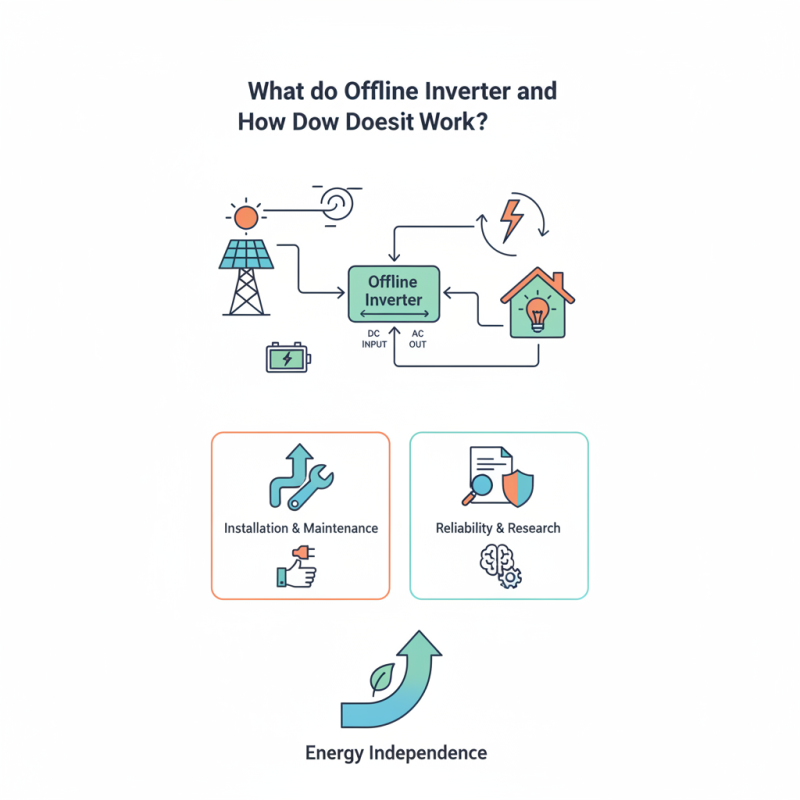
An offline inverter is a crucial component found in many power systems. It transforms direct current (DC) from batteries into alternating current (AC) for household use. This inverter operates without a grid connection, making it essential for off-grid systems. Users rely on it when power outages occur or when they are in remote locations.
In essence, an offline inverter functions by using a built-in battery. When the grid is available, the inverter charges the battery. During an outage, the inverter automatically switches to battery power, ensuring a continuous energy supply. This process might seem seamless, but it requires proper maintenance. If batteries are not kept in good condition, the inverter may fail during crucial moments.
It's important to consider the actual usage of such devices. While offline inverters are designed for efficiency, improper sizing can lead to wasted energy or insufficient power during peak loads. Users should reflect on their energy needs and choose an inverter that suits their specific requirements. This choice can significantly impact reliability and performance.
Offline inverters, also known as stand-alone inverters, play a crucial role in renewable energy systems. They convert DC electricity from solar panels or batteries into AC power for household use. Understanding the key components is vital for maximizing efficiency and reliability.
The heart of an offline inverter is the inverter itself. This component facilitates the conversion process. Next, batteries store energy when solar production exceeds consumption. They ensure continuous power, particularly during outages. Additionally, charge controllers regulate the battery’s voltage and prevent overcharging. A well-designed system will also include protective features, like fuses and circuit breakers, enhancing safety and longevity.
Tip: Regularly check battery health. A battery deterioration affects the entire system's efficiency.
Another essential component is the transfer switch. It allows seamless transition between grid power and inverter power. Monitoring systems can provide data on energy usage and battery status. This feedback can guide users in optimizing their energy consumption.
Tip: Keep track of energy statistics. This awareness can lead to better energy management.
It’s important to acknowledge that not all offline inverters are ideal for every situation. Some users may find limitations in capacity, while others may not fully leverage their features. Always assess specific needs and conditions before making a purchase.
This chart illustrates the key components of offline inverters and their contributions to overall functionality.
Offline inverters primarily convert direct current (DC) from batteries or solar panels into usable alternating current (AC) for household appliances. They play a crucial role in providing backup power during outages. To operate, an offline inverter remains dormant until it detects a drop in grid power. At that moment, it activates, supplying AC power to connected devices.
Interestingly, according to a report from an energy research firm, nearly 30% of homes are now equipped with some form of backup power system, including offline inverters. When fully operational, these devices can provide power for specific appliances like refrigerators or lights, depending on their capacity. However, users may overlook the importance of regularly testing these systems. Failing to do so can lead to unexpected failures when they are most needed.
The efficiency of offline inverters varies. Some models may provide a continuous output of around 80% to 90%. This means that not all the energy stored is used effectively. Users must be aware of this to maximize their energy use and reduce wastage. It's crucial for homeowners to periodically evaluate their systems and consider potential upgrades. This approach can lead to improved reliability and sustainability.
Offline inverters are popular in solar energy systems. They convert DC electricity into AC for home use. However, they come with both advantages and disadvantages that users should consider carefully.
One major advantage is cost-effectiveness. Offline inverters are generally cheaper than their counterparts. According to a report by the Solar Energy Industries Association, the initial investment can be about 30% lower. They are simpler and require less maintenance. This can be a big plus for homeowners looking to save money.
On the downside, offline inverters cannot supply power during outages. When the grid goes down, your system shuts down too. This lack of backup power is a critical limitation. Depending on your location, this might not be a deal-breaker. But it’s essential to assess your reliability needs.
Tips: Consider installing a battery backup system. This could work in tandem with your offline inverter to provide power during outages. Additionally, conduct regular inspections of your system to ensure optimal performance. Even reliable systems can experience wear over time. Always prioritize safety and efficiency.
Offline inverters play a crucial role in our daily lives by converting DC power to AC. They are typically used in solar energy systems and backup power solutions. In homes, offline inverters can provide necessary power during outages. This ensures that essential appliances, like refrigerators and lights, continue to function.
In addition to providing backup power, offline inverters are commonly found in recreational vehicles (RVs). They allow travelers to use household appliances without needing to rely on external power sources. This flexibility enhances the convenience of RV travel, enabling users to enjoy amenities like microwaves and televisions on the go.
However, their efficiency can sometimes be a concern. Users might notice limitations in power output, especially with high-demand devices. It's essential to evaluate the total wattage your appliances require. Overloading an inverter can lead to frequent tripping and interruptions. This highlights the need for careful planning and understanding of both your inverter and your power needs. Proper usage can lead to a smoother, uninterrupted experience.