China Top Sand Dredger Manufacturers for Global Buyers
China has become a major sourcing base for Sand Dredger equipment, supported by strong shipbuilding capacity, mature manufacturing networks, and expanding engineering expertise. Global buyers now face many choices, from compact river dredgers to high-capacity cutter suction models. The right choice depends on more than purchase price. Soil conditions, dredging depth, transport distance, pump performance, fuel use, and after-sales support all matter.
Professor Cees van Rhee, a respected dredging technology specialist at Delft University of Technology, has stated, “Dredging is a combination of soil mechanics, fluid mechanics, and equipment.” This principle remains practical when evaluating Chinese manufacturers. A reliable supplier should explain how its Sand Dredger handles clay, sand, gravel, or mixed sediment. Factory inspection also matters. Buyers should examine welding quality, hydraulic layouts, cutter materials, spare-part access, and production testing. Small details often reveal large differences.
Not every catalogue claim is easy to verify. Some production figures may reflect ideal conditions, not daily operation. That deserves careful questioning. A trustworthy manufacturer should provide test records, reference projects, technical drawings, and clear warranty terms. It should also discuss environmental controls, including turbidity management and safe working procedures. Experience matters here.
This outline introduces leading China-based Sand Dredger manufacturers for global buyers. It considers product range, customization, export experience, technical strengths, service response, and buyer suitability. The ranking is not absolute. Project conditions change the answer. A powerful dredger may perform poorly in a narrow channel, while a smaller unit may offer better control and lower operating costs. Practical evidence should guide the final decision.
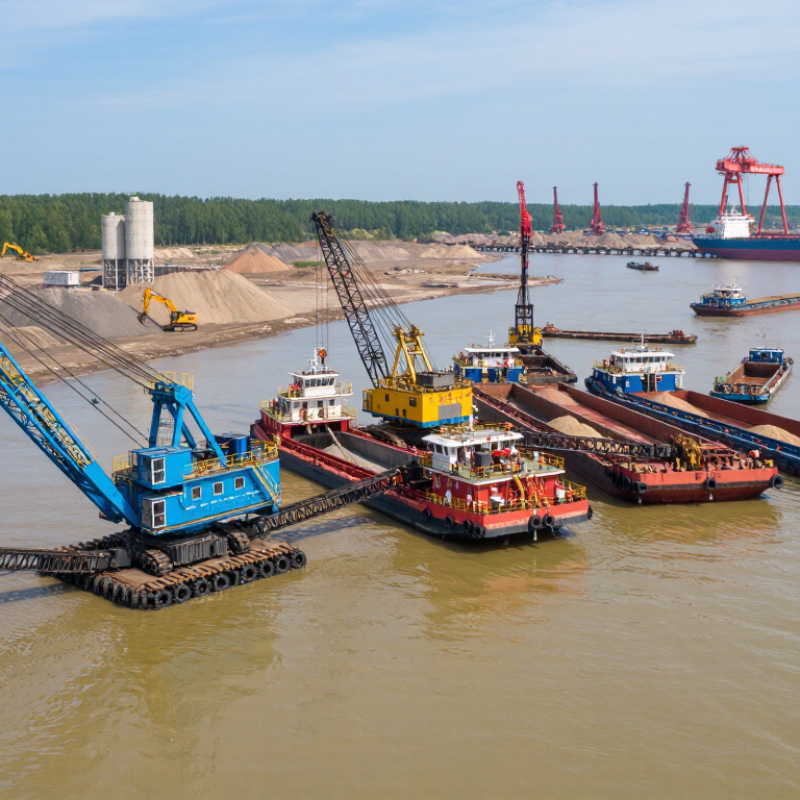
What Is a Sand Dredger and Why China Serves Global Buyers
A sand dredger is a vessel or floating machine that removes sand from underwater beds. It uses a cutter, suction pipe, pump, or bucket system. The material then moves through pipelines or onto a barge. Its work supports land reclamation, construction supply, and channel maintenance.
UNEP’s Sand and Sustainability report estimates that people use 40–50 billion tonnes of sand and gravel each year. USGS data also recorded about 970 million metric tons of construction sand and gravel produced in the United States in 2023. These figures show why reliable dredging equipment matters. China serves global buyers through a mature manufacturing network, flexible engineering, and established export logistics. Many Chinese factories can adjust pump capacity, hull size, discharge distance, and automation levels. This helps buyers match equipment with river depth, sediment density, and project scale. Still, low purchase cost can hide weak after-sales support. That part deserves more attention.
Tips: Request verified capacity data, material certificates, operating videos, spare-parts lists, and reference projects. Compare fuel use, wear rates, delivery terms, and local service access. A practical factory inspection is better than polished brochures. Some specifications may look impressive but perform differently in abrasive sand. Ask for independent testing where possible.
China Top Sand Dredger Manufacturers for Global Buyers - What Is a Sand Dredger and Why China Serves Global Buyers
| Dredger Type | How It Works | Typical Production Capacity* | Typical Working Depth* | Suitable Sand or Sediment | Common Global Applications |
| Cutter Suction Dredger | A rotating cutter head loosens compacted material, while a centrifugal pump transports the slurry through a discharge pipeline. | 100–5,000 m³/h of slurry | Approximately 2–25 m | Fine sand, medium sand, gravel, clay, and compacted deposits | Land reclamation, port construction, canal deepening, and aggregate recovery |
| Trailing Suction Hopper Dredger | Drag heads collect loose seabed material while the dredger loads the mixture into an onboard hopper for transport and disposal or reclamation. | 1,000–10,000 m³/h of slurry | Approximately 10–60 m | Loose sand, silt, and soft marine sediments | Offshore sand mining, navigation-channel maintenance, and beach nourishment |
| Bucket Ladder Dredger | A continuous chain of buckets excavates the seabed and lifts the material to a conveyor, barge, or processing system. | 100–2,000 m³/h of material | Approximately 5–30 m | Sand, gravel, clay, and relatively firm deposits | Continuous aggregate extraction, river work, and shallow-water excavation |
| Jet Suction Dredger | High-pressure water jets fluidize sand, and a suction pump transports the resulting sand-water mixture. | 100–1,500 m³/h of slurry | Approximately 3–20 m | Loose, fine, and medium-grained sand | River sand recovery, shallow-water filling, and stockpile replenishment |
| Grab or Clamshell Dredger | A mechanically operated grab removes material vertically and places it into a barge or receiving hopper. | 50–500 m³/h of material | Approximately 5–50 m | Sand, silt, gravel, and mixed seabed deposits | Confined ports, bridge foundations, quay walls, and contaminated-sediment handling |
| Small Modular Dredger | Compact pontoons, pumps, and pipelines are assembled for transport to remote or restricted work areas. | 50–500 m³/h of slurry | Approximately 2–15 m | Fine sand, silt, soft clay, and light gravel | Small rivers, ponds, irrigation channels, reservoirs, and inland construction sites |
| Buyer Evaluation Dimension | What Global Buyers Should Check | Why China Is Commonly Considered |
| Customization | Confirm pump size, cutter power, hull dimensions, ladder length, pipeline diameter, and discharge distance against the project design. | Manufacturing bases in China commonly support project-specific configurations for inland, coastal, and offshore applications. |
| Production Measurement | Separate slurry flow from dry solids output; actual capacity depends on solids concentration, sediment type, pipeline length, and pump head. | Chinese suppliers generally publish configurable pump and pipeline specifications rather than relying only on a single nominal capacity. |
| Export Readiness | Request packing plans, shipping dimensions, electrical specifications, spare-parts lists, manuals, and commissioning support. | China’s large industrial supply chain supports containerized components, knock-down shipment, and export-oriented documentation. |
| Compliance and Certification | Verify applicable requirements such as CE marking, marine classification, electrical conformity, environmental permits, and local safety rules. | Certification can usually be coordinated according to the destination market and vessel or project classification requirements. |
| Total Cost of Ownership | Compare fuel or electrical consumption, cutter and pump wear, maintenance intervals, spare-parts availability, and operator training. | China offers a broad range of equipment sizes and component options, allowing buyers to balance initial investment with operating requirements. |
*The capacity and depth figures are indicative industry ranges. Actual performance varies with dredger size, sediment characteristics, solids concentration, pump configuration, pipeline length, weather, and operating conditions.
Key Capabilities of China’s Leading Sand Dredger Manufacturers
China’s leading sand dredger manufacturers combine practical engineering with scalable production. Their teams usually study seabed depth, sand density, discharge distance, and local weather before recommending equipment. This prevents buyers from ordering a powerful machine that performs poorly in shallow water. Common options include cutter suction dredgers, jet suction systems, and compact river dredgers. Each design suits different working conditions.
Manufacturing capability extends beyond hull assembly. Skilled factories produce wear-resistant slurry pumps, reinforced cutter heads, floating pipelines, and hydraulic systems. They also use load testing and trial operation before shipment. A reliable supplier should provide pump curves, production estimates, fuel data, drawings, and inspection records. Clear technical documents help overseas buyers compare machines fairly. Small details matter here.
Remote monitoring is becoming more useful. Operators can track engine temperature, pump pressure, fuel use, and production changes from the control cabin. Some projects also need modular structures for easier transport and faster installation. Export-ready manufacturers often support spare-parts planning, operator training, installation guidance, and long-term maintenance. However, no dredger fits every site. The wrong cutter, pipe size, or pump selection can reduce output sharply. Buyers should verify field references, test data, and service response times instead of trusting attractive specifications alone. Mistakes still happen. Careful checking remains essential.
China Top Sand Dredger Manufacturers for Global Buyers
Key Capabilities of China’s Leading Sand Dredger Manufacturers
Indicative production-capacity ranges for commonly supplied cutter suction sand dredger classes. Actual performance depends on pump configuration, sediment type, dredging depth, pipeline length, and project conditions.
Capacity is shown in cubic metres of slurry per hour. The ranges represent typical engineering specifications available in the Chinese dredging equipment market and are not company-specific ratings.
How to Compare and Select a Chinese Sand Dredger Supplier
China Top Sand Dredger Manufacturers for Global Buyers
How to Compare and Select a Chinese Sand Dredger Supplier
Selecting a Chinese sand dredger supplier requires more than comparing quoted prices. Start with your site conditions: water depth, soil hardness, production target, and transport distance. Ask whether the proposed dredger suits sand, gravel, or mixed sediment. A machine designed for soft river sand may struggle in compact deposits.
Request detailed specifications, including pump capacity, digging depth, discharge distance, fuel use, hull steel grade, and cutter performance. Photos help, but operating videos and test records provide stronger evidence. Ask for references from projects with similar water conditions and daily output. Factory inspections can reveal welding quality, component storage, and assembly discipline. Small details matter.
Check warranty coverage, spare-parts availability, installation support, and response times. A reliable supplier explains limitations instead of promising maximum performance everywhere. Compare the full ownership cost, not only the equipment price. Include shipping, commissioning, operator training, maintenance, and possible upgrades. A low quotation can hide weak after-sales support. That weakness matters.
Use written acceptance standards before placing an order. Define output, fuel consumption, delivery milestones, and testing procedures clearly. Independent inspection may add cost, but it can reduce disputes. I would still leave room for uncertainty, because field conditions rarely match laboratory data perfectly. A spreadsheet can mislead. Supplier transparency is often more valuable than impressive claims.
Customization, Export Compliance, and After-Sales Support
China Top Sand Dredger Manufacturers for Global Buyers
Customization should begin with site evidence, not a sales brochure. Buyers should share sediment type, pumping distance, water depth, output target, and local power conditions. UNEP’s 2022 Sand and Sustainability report estimates that 50 billion tonnes of sand and gravel are extracted globally each year. That scale makes efficiency, wear resistance, and environmental controls practical concerns. A reliable manufacturer can adjust cutter geometry, slurry pumps, discharge pipelines, and control systems. Yet more customization is not always better. Extra features may increase maintenance and operator training.
Export compliance needs equal attention. Manufacturers should provide commercial invoices, packing lists, certificates of origin, test records, and accurate product classifications. Electrical systems may require destination-specific conformity documents. Marine projects also need careful review of safety and emissions requirements. The IMO’s 2023 greenhouse-gas strategy targets net-zero shipping emissions by around 2050, so buyers should examine fuel use and auxiliary power demand. Documentation can still contain small errors. Verify every serial number and specification before shipment.
Tips: Request a factory acceptance test with measured flow, pressure, vibration, and fuel data. Confirm spare-parts availability before signing. After-sales support should include remote diagnostics, installation guidance, technician training, and response-time commitments. Keep a written maintenance log. It reveals recurring failures. A capable supplier should discuss limitations openly, including unsuitable soil conditions, seasonal access, and realistic production losses. That honesty is often more valuable than a perfect quotation.
