
Choosing the right Well Drilling Equipment in 2026 starts with the ground beneath the rig. A compact rotary rig can suit a tight residential lot, while a truck-mounted system may be better for deeper or more demanding work. Air, mud, and cable-tool rigs each bring different strengths. None is the universal answer.
The U.S. Geological Survey’s 2015 water-use assessment found that groundwater supplied about 26 percent of U.S. freshwater withdrawals. USGS hydrologist Cheryl A. Dieter and coauthors document that substantial reliance in their national assessment. It is useful context, not a forecast of equipment sales. Local aquifer depth, rock hardness, access, and water quality still shape the rig choice. A national number cannot tell a contractor whether a site needs a high-torque rotary rig or a lighter, portable unit.
Details matter. A narrow driveway, loose sand, or fractured granite can change the equipment plan before drilling begins. Buyers should compare rated depth, mast capacity, circulation systems, maintenance access, and parts availability—not just purchase price. A rig that looks powerful on paper may be awkward on a muddy site. That is worth admitting.
This guide compares the leading equipment types and explains where each tends to fit. It also flags trade-offs, because product claims are not field results. No verbatim expert quotation is included here: without a supplied source, attributing one would risk misquoting an industry professional. The focus stays on verifiable data and practical selection criteria.
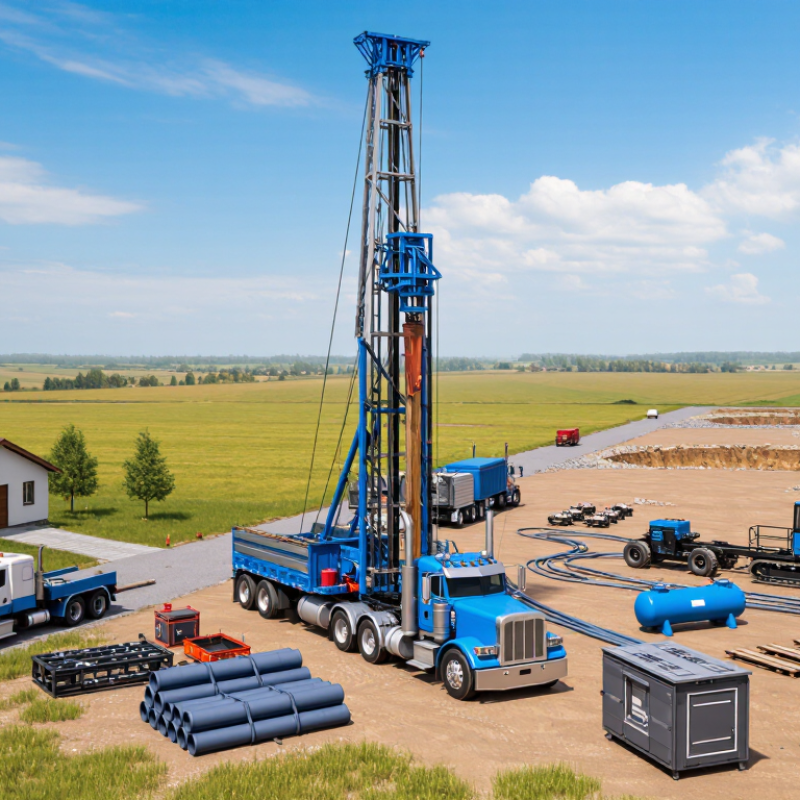
What Are the Top Well Drilling Equipment Types in 2026?
What Well Drilling Equipment Includes and How It Works
Well drilling equipment is a coordinated system, not a single machine. A rig supplies force and rotation, while the mast supports the drill string. A hoist raises or lowers the pipe. At the bottom, the drill bit cuts through soil or rock. Different bits suit different formations, and choosing one by habit can cause rapid wear.
During drilling, pumps send fluid through the drill pipe and back up the space around it. The flow cools the bit, carries cuttings to the surface, and helps stabilize the borehole. A tank and screens separate debris before the fluid circulates again. In loose ground, casing can help prevent the hole from collapsing. Equipment choices depend on depth, geology, access, and water quality. Conditions can shift, so a setup may need a rethink.
Tips: Check connections, guards, hoses, and fluid levels before operation. Watch returned cuttings and pressure readings, not just drilling speed. Small details matter.
What well drilling equipment includes and how it works
This simplified sequence shows how key equipment contributes to well construction. The hoisting system raises and lowers the drill string; the rotary drive turns it; and the bit cuts the formation. Drilling fluid circulates through the drill string to carry cuttings to the surface. Casing and cement support and seal the well as it is built. Blowout preventers (BOPs) help control well pressure during drilling; well-control equipment is used as needed, not only at a final step. Some operations, such as rotation and fluid circulation, happen concurrently.
The right drilling rig depends on well depth, ground conditions, water quality goals, and site access. For shallow water wells in softer soils, a compact rotary rig can drill efficiently with circulating fluid to carry cuttings upward. In loose sand or gravel, casing may be needed during drilling to keep the hole from collapsing. Conditions can change within a few metres, so a soil log matters more than a tidy rule of thumb.
For deeper wells through hard rock, an air rotary rig with a down-the-hole hammer can fracture rock and lift cuttings with compressed air. Cable-tool rigs work more slowly, but their simple, steady action can suit some small sites and formations where careful control is useful. They are not a fit for every schedule. For narrow access, compare mast height, turning space, and ground-bearing pressure before choosing a rig; a powerful machine is little help if it cannot reach the drill point.
Tips: Ask the driller how the rig handles the expected formation, casing, and target depth. Check the proposed bore diameter against pump and screen requirements. Keep room for cuttings and water handling. If test data is limited, allow time for the plan to change. That can feel inefficient, but guessing wrong costs more.
| Rig or Drilling Method | How It Works | Best-Suited Well Types | Typical Ground Conditions | Indicative Depth Range | Key Advantages | Main Limitations |
|---|---|---|---|---|---|---|
| Rotary mud rig | A rotating bit cuts the formation while drilling fluid circulates through the drill pipe and carries cuttings to the surface. | Water-supply wells, irrigation wells, and many municipal production wells. | Unconsolidated sand, silt, clay, and mixed formations; suitable for many sedimentary sequences. | About 100–600 m (330–1,970 ft), depending on rig capacity and formation. | Efficient in many soft and mixed formations; drilling fluid can help support the borehole walls. | Requires fluid handling and management; fluid may complicate sampling or be unsuitable in some sensitive formations. |
| Air rotary rig | Compressed air circulates down the drill string and returns cuttings through the annular space. | Water wells in hard-rock areas and exploratory boreholes where fluid use should be limited. | Competent rock and formations where air can effectively lift cuttings; some unstable formations may require casing. | About 100–600 m (330–1,970 ft), with depth limited by equipment, hole size, and geology. | Does not require conventional drilling mud; can provide rapid penetration in suitable formations. | Dust and noise control are important; water-bearing or unstable zones can reduce efficiency or require additional methods. |
| Down-the-hole (DTH) hammer rig | A pneumatic hammer positioned near the bit delivers repeated impacts while the drill string rotates. | Deep water wells and boreholes in hard, fractured rock. | Hard granite, basalt, and other competent formations; often used with air circulation. | About 100–1,000 m (330–3,280 ft), depending on hole diameter, compressor capacity, and ground conditions. | Effective penetration in hard rock and generally produces a relatively straight borehole. | Requires substantial compressed-air capacity; performance can decline in loose, water-saturated, or highly fractured ground. |
| Cable-tool percussion rig | A heavy bit repeatedly lifts and drops to break the formation; cuttings are periodically removed with a bailer. | Water wells in formations where a slower, adaptable drilling method is acceptable. | Many consolidated and unconsolidated formations, including some variable or water-bearing ground. | About 30–300 m (100–980 ft), varying considerably with formation and rig design. | Simple drilling-fluid requirements; can be useful where formation samples and water entries need to be observed. | Typically slower than rotary methods and may require more time for deep or large-diameter holes. |
| Hollow-stem auger rig | Helical augers advance the borehole; the hollow center can provide access for sampling or installing small-diameter wells. | Shallow monitoring wells, soil investigations, and some shallow water wells. | Soft to moderately stiff, relatively unconsolidated soils above groundwater or in stable formations. | Commonly about 5–60 m (16–200 ft), depending on soil, water conditions, and equipment. | Can support soil sampling and well installation without circulating drilling fluid. | Generally unsuitable for deep wells, hard rock, cobbles, or very loose formations below the water table. |
| Sonic drilling rig | High-frequency vibration combined with rotation advances a core barrel or casing through the formation. | Environmental monitoring wells, geotechnical borings, and projects requiring continuous samples. | Layered soils and mixed formations, including some difficult unconsolidated materials. | Often about 30–300 m (100–980 ft), depending on borehole diameter and ground conditions. | Can recover continuous, relatively undisturbed samples and reduce the need for drilling fluids. | Equipment is specialized and typically more costly to mobilize; very hard formations may slow progress. |
| Reverse-circulation rotary rig | Circulation carries cuttings upward inside the drill pipe, while fluid or air moves down the annular space. | Large-diameter production wells and high-capacity water-supply wells. | Unconsolidated and mixed formations where large boreholes are required. | About 100–600 m (330–1,970 ft), depending on hole size, circulation system, and geology. | Can efficiently remove cuttings from large-diameter holes and support high-yield well construction. | Requires specialized circulation equipment and substantial site space; setup and fluid management can be complex. |
Planning note: Depth ranges are indicative, not guaranteed operating limits. The appropriate rig depends on target aquifer depth, required borehole diameter, geology, water conditions, site access, casing plan, and local regulations.
Drill bits, pipes, and mud systems remain central to efficient well construction. In 2026, operators increasingly match bit design to formation hardness, abrasiveness, and expected depth. A sharp polycrystalline bit can cut consolidated rock efficiently, while roller-cone bits may offer better control in changing formations.
Bit selection is never automatic. Local geological data still matters more than simple equipment trends.
Drill pipes transfer torque and drilling fluid through the wellbore. Their steel grade, connection design, and wall condition affect safety and drilling speed. Experienced crews inspect threads, measure wear, and watch for unusual vibration. A damaged connection can create costly delays.
Mud systems also deserve close attention. Pumps, tanks, shale shakers, and mixing units help control pressure and remove drilled solids. Proper fluid density supports borehole stability and carries cuttings to the surface. Small changes in viscosity can reveal developing problems.
Tips:
Check the bit after every critical interval. Record torque, penetration rate, fluid pressure, and return flow. Clean mud tanks regularly, but do not ignore worn screens or leaking hoses. Keep pipe inspections documented and easy to review. No setup is perfect. Field conditions can change faster than planning models, and even experienced teams sometimes adjust too late. That weakness should remain visible during equipment reviews.
In 2026, well drilling equipment selection depends heavily on pumps, hoists, and safety systems. The pump must match formation pressure, fluid density, and expected flow rate. Positive-displacement mud pumps suit high-pressure circulation, while centrifugal pumps handle transfer and mixing duties. A pressure gauge alone is not enough. Operators should also monitor pulsation, vibration, seal wear, and discharge temperature.
Hoisting equipment needs equal attention. Drawworks, hydraulic winches, and auxiliary lifting systems should include load indicators, automatic brakes, and secondary retention. A wet, muddy deck can turn a routine pipe movement into a serious event. The U.S. Bureau of Labor Statistics reported 5,283 workplace fatalities in 2023, with transportation and material-moving work among the highest-risk groups. Drilling contractors should treat lifting controls as production equipment, not optional protection.
Safety equipment must support real field behavior. Guarded rotating parts, emergency stops, gas detection, fall protection, pressure relief devices, and blowout prevention systems require regular inspection. The IOGP Safety Performance Indicators report tracks fatalities, lost-time injuries, and high-potential events across energy operations. Its approach supports measurable safety management, rather than informal confidence. One uncomfortable lesson remains: a perfect checklist can still miss a damaged brake or poorly positioned hose. Experienced crews recheck critical equipment before pressure, lifting, and personnel exposure increase.
Selecting well drilling equipment in 2026 should begin with ground conditions, not equipment popularity. A rotary rig suits many soft to medium formations and supports mud circulation. Down-the-hole hammer rigs work efficiently in hard rock, where compressed air clears cuttings quickly. Cable tool rigs remain useful on smaller, shallow projects, although they usually drill more slowly.
Start with a site investigation. Review soil layers, rock strength, groundwater depth, expected borehole diameter, and access limits. A compact rig may reach a narrow rural site, while a larger hydraulic unit handles deeper wells and difficult casing work. In loose sand, mud rotary equipment can stabilize the borehole. In fractured rock, air drilling may lose circulation, so foam or another controlled fluid system could be necessary. Conditions change underground.
Experienced crews also check torque, feed force, compressor capacity, mast height, and spare-part access before mobilization. These details often matter more than headline drilling speed. Sensors can track pressure, rotation, penetration rate, and vibration during drilling. That data helps identify unstable formations early. Still, digital readings are not perfect. Cuttings should be examined by trained personnel, and drilling logs need honest updates when conditions differ from the survey. A carefully chosen rig can still underperform if the bit, casing method, or fluid program is poorly matched. Crew judgment remains important.